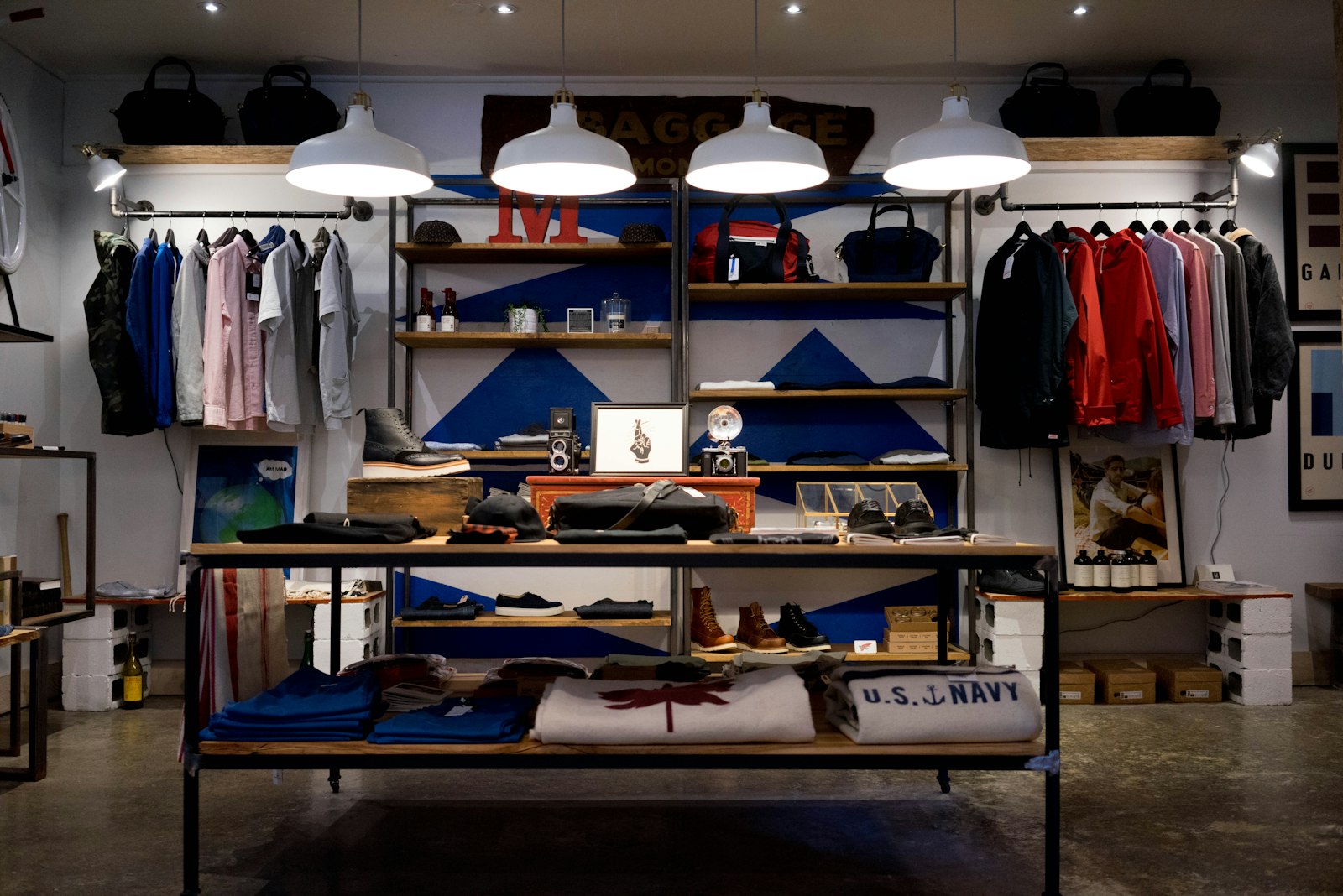
There is a particular failure mode that kills brands on Faire before they ever get started. They spend weeks photographing products, designing packaging, setting wholesale prices — and then they rush through the catalog upload, treating product data as an afterthought. Titles get truncated. Images are repurposed from Instagram. Barcodes are left blank. Tags are copy-pasted from Amazon.
Six weeks later, they wonder why their Faire storefront is generating zero inbound inquiries from retailers.
Faire is not Amazon. It is not Google Shopping. The buyers browsing Faire are independent boutique owners and specialty retailers who are making real purchasing decisions — often committing to minimum order quantities of $150-$300 at a time, net-60 payment terms, without ever seeing your product in person. The quality of your catalog data is the entire pitch. This guide covers what Faire actually requires, what it recommends, and where most brands quietly lose ground without realizing it.
The Fundamental Catalog Fields
Faire's product listing structure is built around a core set of fields that all products need, whether you are a ceramics maker selling $18 mugs or a consumer electronics brand uploading 400 SKUs.
Title is capped at 60 characters. This is stricter than most platforms, and it forces a discipline that many brands resist: no keyword stuffing, no parenthetical modifiers, no "(Set of 4)" tacked on at the end. The best-performing Faire titles tend to be direct and specific — "Linen Napkins, Stone Grey, Set of 4" rather than "Elegant Natural Linen Dinner Napkins Perfect for Modern Minimalist Home Decor Gift Set of 4." Faire's internal research suggests titles under 50 characters actually perform slightly better in search results, because the algorithm treats them as more confident product identifications.
Description has a hard limit of 1,000 characters. That is roughly 150-180 words — enough for two or three tight paragraphs. The best descriptions on Faire do one specific thing: they answer the question a retailer buyer is actually asking, which is almost never "what is this product" but rather "why will my customers want this, and how will it sell in my store?" Dimensions, materials, care instructions, and a clear statement of what makes the product distinctive. That is the formula.
Wholesale price and MSRP are both required fields, and both numbers matter. Faire uses the spread between wholesale and retail as a signal of how viable the product is for a retailer's margin. A product with a 2x keystone margin (wholesale at 50% of MSRP) is considered the floor. Brands with 2.5x-3x margins attract more retail interest because boutiques have overhead, shrinkage, and payment terms to absorb. If your MSRP is $24 and your wholesale is $14, Faire's buyer-facing display will show that margin clearly. Retailers see it.
Minimum order quantity and case size define how retailers can actually purchase from you. MOQ is the dollar minimum per brand (set at the brand level, not per SKU), while case size is the SKU-level quantity increment. A candle brand might set a $200 brand MOQ with case sizes of 6 per scent. Getting these wrong — setting case sizes too high, or MOQs that make small boutiques unable to trial your line — is one of the most common reasons brands see visits but no orders.
Images: The 1,825-Pixel Rule
Faire has published specific image dimension requirements that most brands uploading from Amazon or their own Shopify store will fail on the first attempt.
The main product image must be at least 1,825 by 1,825 pixels, shot on a white background, with no props, watermarks, or lifestyle context. This is a square format shot whose only job is to show the product clearly against white. Faire uses this image in search results, recommendation carousels, and retailer buying summaries — contexts where clarity and consistency matter more than atmosphere. The 1,825-pixel minimum exists because Faire renders at high DPI for buyers using retina displays, and anything lower starts to look soft next to competitors who did it right.
Beyond the hero image, Faire recommends at least four images per product: the white-background hero, one or two lifestyle shots showing the product in context, a packaging or merchandising photo showing how it ships and displays, and a detail shot highlighting materials or craftsmanship. Four images is not a guarantee of more orders, but Faire's listing quality score — which directly affects algorithmic visibility — penalizes products with fewer than four.
For brands managing large catalogs, this is where product image requirements get genuinely painful. If you have 200 SKUs and 40% of your existing images are below 1,825 pixels, or were shot on colored backgrounds, you are looking at a significant re-shoot budget or at least a round of editing before your Faire catalog performs at the same level as competitors who got this right from day one.
Barcodes and GTINs: Not Required, But Quietly Important
One question that comes up repeatedly from brands preparing their Faire catalogs: do you need a UPC or EAN barcode?
The technical answer is no — Faire does not make barcodes a required field for listing products. This is meaningfully different from Amazon, where a GTIN exemption is a formal process, or Google Shopping, where missing GTINs can result in disapproved listings. Faire was built for independent makers, many of whom did not start with GS1-registered barcodes, and the platform has always accommodated catalog-only SKUs that exist purely as Faire identifiers.
But 2026 changed the practical calculus. Faire rolled out barcode scanning for order building — retailers can now scan a GTIN with their phone to add products directly to an order without manual search. This is significant for retail buyers who run their purchasing floor with a scanner rather than a keyboard. If your product has a barcode on the packaging, and that barcode is registered in your Faire catalog, buyers who pick up your product at a trade show or encounter it in a peer brand's showroom can build an order on the spot.
For brands that do have GTINs — UPCs for the US market, EANs for international — populating the barcode field on Faire is now worth doing systematically. The complication is that many brands have barcodes on physical packaging but have not maintained a clean mapping between their barcodes and their current product names, descriptions, and images. This is precisely the kind of gap that barcode lookup APIs are built to close: scan your own product barcodes, pull back the registered product name, category, and attributes, and use that data to either pre-populate your Faire catalog or audit what you already have listed.
Tags and the Search Algorithm
Faire allows up to seven tags per product, and this is not a field to treat casually. Faire's search has shifted toward machine-learning-based retrieval that weighs tags as explicit intent signals from the brand. A retailer searching for "botanical body care" will see products whose tags include "botanical," "natural skincare," or "herbalist" — not just products whose titles happen to contain those words.
The pattern that works on Faire tags is specificity layered with category breadth. If you are selling a beeswax candle, your seven tags should not be seven variations of "candle." They should include the material (beeswax, natural wax), the scent profile (cedar, woody, earthy), the occasion or use case (housewarming, meditation, gift), and the retail context (gift shop, home goods store, boutique). Think about the retailer's vocabulary, not your product's vocabulary.
The Algorithm Factors Brands Underestimate
Faire's visibility algorithm is not purely about listing quality. It weights three factors in combination: listing completeness and freshness, customer service metrics, and buyer behavior signals.
Listing freshness matters more than most brands expect. Faire surfaces newly updated listings because the platform interprets catalog edits as a signal that the brand is active. Brands that set up their Faire catalog once and never touch it again are systematically deprioritized relative to brands that update prices seasonally, add new images, or refresh descriptions when products evolve. A quarterly catalog audit — not a full re-shoot, just a review of titles, tags, and descriptions — keeps the freshness signal healthy.
Customer service metrics are the silent killer. Faire penalizes accounts algorithmically for late shipments, unaccepted orders, and slow message response times (Faire expects replies within two business days). A brand that ships late on three consecutive orders will find its visibility in buyer search results degrading over the following 30-60 days. This is not publicized prominently, but it is real. Faire's commission structure (25% on first-time buyers, 15% on reorders) creates a strong platform incentive to prioritize reliable brands in discovery, because a brand that ships late reflects on Faire with the retailer.
Where Product Data APIs Fit In
For brands building Faire catalogs at scale — particularly those migrating from Amazon seller catalogs, managing large multi-SKU lines, or entering new product categories — the bottleneck is almost never photography. It is the structured data: accurate titles, descriptions, categories, and barcodes for hundreds of SKUs.
This is where barcode-first product data enrichment becomes a legitimate workflow. If you have a product with a GS1 barcode, you already have a globally registered product identity. Querying that barcode against a product data API returns the registered brand name, product title, category, and often key attributes — a starting point that is far faster than writing 300 product descriptions from scratch.
SkuMonster's lookup API covers GTINs, UPCs, EANs, and ISBN identifiers. For a brand preparing a Faire catalog upload, the workflow is: export your product list with barcodes, batch-query the API for structured data, review the returned titles and categories, and push cleaned records into Faire's CSV importer. The API returns fields directly mappable to Faire's required data structure — product name, category, brand, description text — which means the enrichment step and the catalog upload can be pipelined rather than handled as two separate manual processes.
For brands that do not yet have barcodes, the reverse question applies: if you are building a new line or expanding internationally, assigning GTINs before your Faire launch rather than after positions you for the barcode scanning workflow that is increasingly standard among high-volume boutique buyers.
Getting This Right Before Launch
Faire's own data suggests that brands with complete listings — four or more images, full descriptions, accurate pricing and MOQ, and seven tags — receive measurably more buyer inquiries in their first 90 days than brands that launch with incomplete catalogs. The platform's listing quality score is not a vanity metric. It is a direct input to the algorithm that decides whether your products show up when a boutique buyer in Nashville searches for exactly what you make.
Product data is not the glamorous part of wholesale. But on Faire in 2026, it is the pitch.
Ready to Try SKU Monster?
If you're managing product data at scale — whether you're on Amazon, Shopify, eBay, or WooCommerce — SKU Monster gives you structured titles, descriptions, images, and pricing for any EAN, UPC, or ASIN in seconds.
No manual entry. No scraping. Just clean product data via API.